
Christmas Baking
Christmas Wafers Recipe: Paper-Thin, Crisp and Made at Home – The Overnight Rest Is the Secret
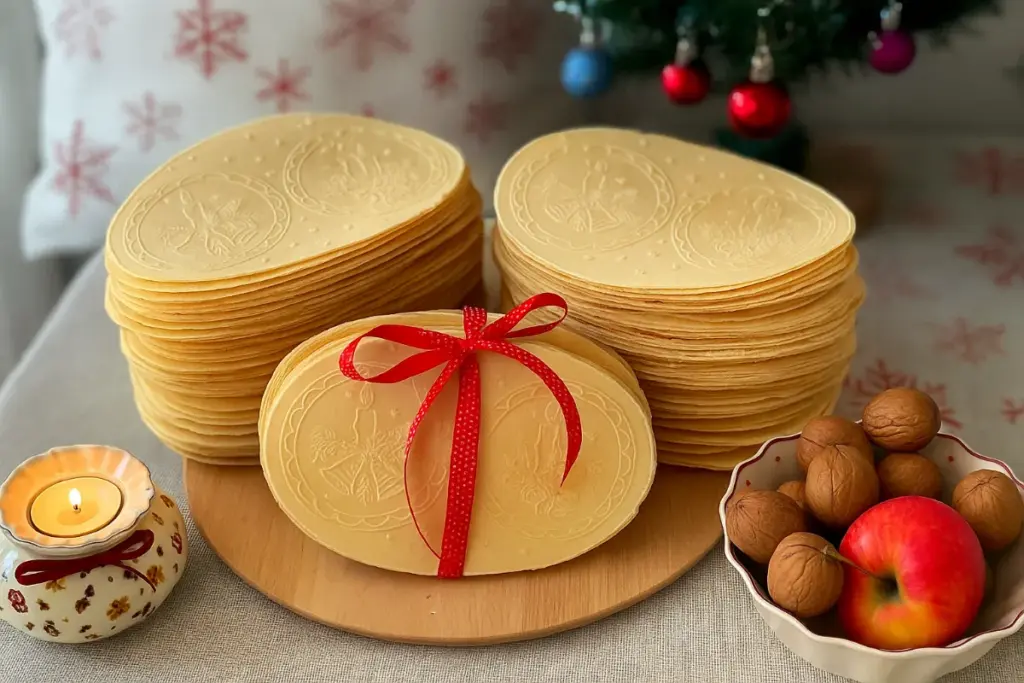
Thin, crisp, lightly sweet Christmas wafers baked in a wafer iron from a batter that rests overnight.
NutritionApproximate, per serving
Instructions
Prepare the dry mixture: Sift the flour into a large bowl. Add the cinnamon for aroma and whisk to combine.
Dissolve the sugar: Take about a third of the water (about 1 1/3 cups / 330 ml), warm it in the microwave or on the stove and stir in the granulated sugar, vanilla sugar and butter until they are completely dissolved.
Mix the base: Pour the sweet water back into the rest of the cold water. Pour the whole amount into the flour, add the egg and whisk by hand into a thick, smooth batter without lumps.
Thin with milk: Gradually, in three additions, pour in the cold milk, whisking thoroughly each time.
Strain: Pour the finished batter through a fine sieve into a container with a lid. This removes even the smallest lumps.
Rest (key step): Let the batter rest in the refrigerator for at least 12 hours (overnight). A rested batter is more elastic and the wafers turn out more delicate.
Bake: Heat the wafer iron to medium heat. Brush the plates lightly with beeswax on a cloth. Pour in a small ladleful of batter, close the iron, press down and bake until steam stops escaping (about 30 seconds).
Flatten: Remove the hot wafer with a wooden spatula, lay it on a board and immediately weigh it down with a second board so it stays flat as it cools.
Finish: While the wafers are still warm, trim the uneven edges with scissors.
- Never use powdered sugar in the batter. It often contains starch, which makes the batter stick to the iron.
- If the batter seems too thin toward the end of baking (the flour settles to the bottom), whisk it well and stir in another spoonful of flour.
- Variation: to make wafer rolls, don't weigh the hot wafer down; roll it immediately around a wooden spoon handle. For a dairy-free version, replace the milk with water; the wafers will be harder but keep longer.
- Store in a dry, airtight container, ideally a tin, for 2–3 months. Keep away from moisture.